Thursday, April 22, 2010

Is A Farm Store In Your Future?

I've been published!  Not because I've set out to be a writer, but because I was asked to contribute to the brand new magazine that the Ohio Alpaca Breeder Association has put out, called Ohio Alpaca Life.  

On-line, on-the-road, or brick-and-mortar?  For me it has been all three.  I do feel blessed to have this sustainable natural resource, renewed each year at shearing time, gorgeous alpaca fiber and fiber products that I can actually derive some income from, especially at a time when alpaca sales are at a lull.  Let me share a little bit about my journey...

Is A Farm Store In Your Future?
By Julie Petty

Brick and Mortar
I'll start with the brick and mortar, because that is where I started.  I am a hands-on kind of person.  I knew I wanted to do something with the fiber, I wanted to be able to show people how alpaca fiber could be used, and I wanted to realize some income from this venture.  About three years into the alpaca business, we put up a small building next to our barn.  My husband and son did the wiring, and hung some track lights.  My dad and I put up some wallboard that looks like brick on the inside walls.  We left the floor as-is, just the wood planks that formed the subfloor, so it is fairly rustic looking.  It's a good thing because we have occasionally had alpacas in the store.  I hung some curtains, and we had a farm store!

The next step was to get a vendor's license.  In the state of Ohio, there are two types of vendor licenses, "Regular" and "Transient". A "regular" vendor's license is issued to vendors with a fixed place of business and is only good for one location. It may be obtained at the County Auditor's office or on-line by clicking Application for Vendor's License.  The Transient license is required for the retailer who transports goods to temporary places of business in order to make sales. The license is issued by the Department of Taxation and valid throughout the state or on-line, click Application for Transient Vendor's License. I am then required to report sales semi-annually and pay the tax collected during the preceding six-month period.  You may want to consult an attorney about what licenses or permits are required in your state.

Next I needed merchandise.  I had fiber, plenty of that, which I bagged by the pound in drawstring bags.  I made labels, pictures of the alpaca contributors, our logo, website, and price, and I had something to sell!  That was easy.  I was learning how to spin at the time so I also had some of my hand-spun yarn, again with a nice label, picture of the alpaca whose fiber the yarn was spun from, and all the pertinent information.  I was learning to spin and had my hands full with that, I knew I did not also want to do the processing, so some of my fiber I sent to a mini-mill and had made into rovings.  Now I had fiber that was ready to spin and another product to sell.  Once I learned to dye, I then had hand-painted rovings to sell.


I also bought product.  Several vendors that I used at the time were Peruvian Link, Andean Art, and America's Alpacas.  There certainly are others that can be found easily by doing an on-line search.  I bought some sweaters, blankets, gloves, socks, and scarves.  I had two display racks from America's Alpacas which I used for the sweaters.  My store was filling up quite nicely.  


Purchasing at wholesale prices requires you to have a tax identification number.  If you don't already have one, they are available at no charge, click Online Application.  Purchasing wholesale usually requires purchasing a minimum quantity.  It is easy to get a lot of money tied up in inventory, if you're not careful.

 Retailers in most industries need to make "keystone", that is a 100% markup between what they pay and the retail price to cover your cost of doing business, make a little, and discount as needed. Discounting as needed is exactly what I ended up doing with the high priced alpaca sweaters, in a non-retail location, in a small town, on a farm.  I later found that smaller, less expensive items, sold better especially when during bus tours.  People just wanted a little souvenir from an alpaca farm.  The exception was this Christmas, I sold sweaters!  Sometimes it is anybody's guess and it is a challenge, figuring out what will sell and where.

I didn't expect to have much retail traffic with a farm store.  We have a long gravel driveway at the end of a residential street.  You don't drive by and see alpacas.  That was okay because I didn't want to keep retail hours.  The store has been very nice for farm events such as National Alpaca Farm Day, seminars we've held at our farm, tour groups, farm visits, and the holidays.  I occasionally have a customer at other times, but not often.  If I were to advertise and spend time promoting the store, I could have more business, but that is not what I've chosen to do.  My work is at home on the farm so I tell people to just call ahead.  I'm open if I'm home.  In case I miss somebody driving past the house on their way back to the store, I have a sign with my cell phone number on the door asking that they call me to let me know they are here.  I keep it fairly loose.

On-The-Road
I do sell to other alpaca breeders, though they are busy with showing and watching the show.  The majority of my sales have come from the public and traffic is usually good if the show has been well promoted.  I usually have my spinning wheel in my booth or my carder and I usually am demonstrating which always attracts attention!  It also gives me something to do if I am slow, I don't sit still very well.  I end up talking to people that are interested in getting into the alpaca business, because I am a captive audience, and so I have also made some good contacts by vending at alpaca shows.  Setting up and tearing down for a show is a job, so I'm always thinking about how it can be done more efficiently.  Alpaca shows have always been worth my while, just seems like breeders ought to get a break on those big vendor fees!

Another challenge is to not have an empty store when I pack up to go to a show.   I almost needed double the merchandise so that the store looked presentable in case we had a visitor while I was away.  That has gotten better.  I didn't have much money tied up in additional inventory and found that bags of fiber nicely displayed, filled in some of the empty spaces.  I also now have more hand-made items and fiber kits, that don't all need to be taken to a show.


Fiber festivals have also been good.  Two that I have gone to are the Great Lakes Fiber Festival in Wooster, Ohio on Memorial Day Weekend and The Wool Gathering in Yellow Springs, Ohio in September.  This year I will be traveling to a show I've not done before, the Midwest Fiber and Folk Art Fair in Grayslake, Illinois.  These shows are fun to do, though you have competition if you are trying to sell fiber and yarn, because so is everyone else!  If you are a fiber artist, these are fun places to shop.  Finding a niche, selling something different than everyone else, is the key!  There is a list of fiber festivals on the Knitter's Review website.  Looking for art shows - click Zapplication.


My most recent venture was to try out farmer's markets, and that has been quite successful!  Farmer's Markets seem to be gaining popularity and springing up all over the place.  Buying local and hand-made is a trend that seems to be on the rise.  For me it has involved getting up very early in the morning to drive several hours to get set-up in time for the market to open at 8am.  It wouldn't be for everyone!  I have attended markets locally that were big flops.  Finding established markets, usually near a bigger city, has made my efforts  much more productive.  Customers have actually started to look for me, but that comes from going back repeatedly, and becoming a familiar vendor at the market.  We've been asked to bring alpacas on opening day at two different markets and that is always a huge success!


It can be fun traveling to shows, getting off the farm some, seeing new places and meeting new people!


On-Line

When I decided to sell products on-line, I started with a farm store on Alpaca Nation and did a little bit of business.  The next step was a stand-alone website with a farm store and on-line shopping cart.  Building a website was a huge undertaking, not for the faint of heart.  What I then learned is that it is one thing to have a nice website, but it is a completely different matter getting people to visit!   I was fortunate enough to find several vendors who were willing to let me put their products on our website, and then drop ship for me when I received an order.  This was huge because it meant I didn't have to carry inventory.  For this reason, I have been able to branch out into fiber equipment such as spinning wheels, carders, and accessories.  You can view our website at www.alpacameadows.com where we are open "on-line anytime".

When funds were low, and now as well, I learned there are many places on-line to post classified ads for free!  There are Yahoo groups and forums to get involved in as a way of promoting business.  There is Facebook.  My kids are on facebook, I never imagined I would be, but I have taken the plunge and found there are lots of alpaca breeders on Facebook and that it can be a valuable marketing tool!  I have a business page at  http://www.facebook.com/alpacameadows - "keep up with what's new at Alpaca Meadows - become a fan today!"  Facebook can be a valuable marketing tool.  

There is Twitter, though that is really new for me and I'm not real sure how productive it is.
Twitter is a free social networking and micro-blogging service that enables its users to send and read messages known as tweets.  It is an information highway.  If you're a Tweeter, you can find me at http://twitter.com/alpacameadows I have still have much to learn in the social networking arena, but from what I read, I need to get on board and ride.

I'm also blogging, not clogging, blogging!  Blog is short for web log, and is actually a web page that serves as a publicly accessible personal journal for an individual.  It is like a website but it is active in that the information is frequently updated, versus a website that is static for the most part.  My blog is at http://alpacameadows.blogspot.com.  The spin on my blog is "Sharing Life as a Fiber Artist Living On An Alpaca Farm".  I am including lots of pictures and how-to's in an effort to make it interesting and engage the reader.  It is yet another way of networking with prospective customers and allowing them to see me in a more personal way.


I am on Flickr, an
online photo management and sharing application, and another way to connect with people with similar interests.   Ravelry, of which I am a member, is a community site, an organizational tool, and a yarn and pattern database for knitters and crocheters.  There are many groups available to join and forums to post in, to learn new things and promote products.  Both sites are free!  I am AlpacaLady on Flickr.

Last, but not least, I have a shop on
Etsy, like Betsy, without the B.  Etsy is a website that provides the general public with a way to buy and sell handmade items as well as vintage items and craft supplies.  My shop is AlpacaMeadows.  ArtFire is another online marketplace and it is free.  What has been very helpful with Etsy is that there is help!  There is a community of helpful people and lots of information from pricing your products, to photographing, to tagging, to marketing, and lots, lots more.  Again, this is a marketplace for all things hand-made so this is not for everyone either.


So, is a farm store in your future?  I've shared with you what I have done, but there are many ways to go about selling.  I am no expert, and I still have a lot to learn, but I've been successful because I work hard and I'm not hesitant to try a new approach.

I hope you'll visit The Farm Store at Alpaca Meadows!


10 Tips for Successful Media Marketing

Tuesday, April 20, 2010

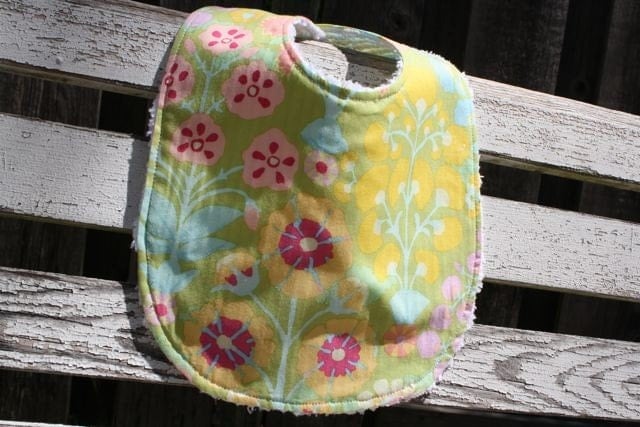
Winner - Baby Bib Flower Sprays Girl

The winner of this week's contest is 
Congratulations!

Be sure to check out this shop on Etsy . . .
Colorful gifts for wee babies and toddlers! Appliqued Onesies and Tshirts, Cozy Blankets, Bibs and Burp Cloths. Lovingly handmade in Alabama!

Blog: http://monsterbugblankets.blogspot.com
Facebook: http://www.facebook.com/monsterbugblankets


Thank you to all who participated!


The Baby Book: Everything You Need to Know About Your Baby from Birth to Age Two

Friday, April 16, 2010

Birthing Season Is Upon Us

Here I sit in my office.  It's killing me this morning as I look outside and see blue sky, green grass, yellow daffodils, and trees budding, finally!  It has been a long winter.  I must get outside.  Working out of my home, owning my own business, wow, is quite a challenge.  I try to be disciplined, but the fresh air is calling me.

I think I'll go out and take some pictures . . .

 With Spring comes birthing season and we are very close to the arrival of our first two babies, alpacas that is, called crias.  Champa and Trepeta are the first two mamas to deliver.  Their due dates are April 17th and April 18th so we are very, very close!

 This is Champa in her younger days.  From Chile with a birth date of January 1, 1994, she is 16 years old and the oldest alpaca on our farm.  

 She is turning a bit gray after that many years and nine babies, that we know of.  This list includes Mr. Champion, Chauncey, Cacao Chapaco, Devonshire Cream, Cream Dee'la Cream,  Rae of Light, Cinnabar, Discovery, and Unlimited Joy.  She is the matriarch of our herd.

 Trepeta is a younger girl, in the prime of her production years.  Her heritage is Peru and she comes from some famous bloodlines.  She is one pretty girl!

 This picture is before she was shorn that very first time.

She has had one baby, a female whose name is Ditto, because she looks just like her mom!

Both Champa and Trepeta have slowed down in the last few weeks, spend more time laying around, tend to separate from the herd, and are a little irritable when another alpaca gets in their space.  I've seen some rolling going on as they help to get those babies in position to deliver them.

 I have lots of windows in my kitchen and I have a great view of the pasture right behind the house.  That is where I keep our "maternity ward", the moms with new babies and those getting ready to have babies.  I can watch from a distance so as not to make them nervous.

 Most times the birth of a new cria happens just the way it is supposed to.  I often think I need to be there to help but sometimes too much human intervention causes more problems than it helps.  

 It is a miracle to me each time that all falls into place, and most times it does happen just the way it is supposed to.  Just like our own lives . . .

 
Moms usually give birth standing, once the head and front legs are out mom takes a break, baby hangs there a short while which allows fluid to drain from the lungs. 


Gently the baby slides to the ground.  I do like to slide a blanket under baby before she hits the ground, probably not necessary, no one does it in the wild, but I feel better. . .


She squirms around and must figure out how to get to her feet to find something to eat, in order to survive. 

 Within an hour a new cria is on her feet, has met mom . . .


. . . and is receiving the nourishment she needs.  All is well.

After eleven plus months of waiting, it is still exciting to anticipate the birth of new babies.  Witnessing the birth is a privilege.

,
Caring for Llamas and Alpacas: A Health & Management Guide 

Wednesday, April 14, 2010

Spring Has Sprung!

Spring Has Sprung!  I think it really has and I am loving it.  The earth comes back to life, all is fresh and new and growing again.
Leave a comment and vote for your favorite item, that is not your own, in my Spring Has Sprung Blog Treasury.  The winner will be posted here, in next week's announcements, and on my FB page!


Waiting For Spring (Volume 1)Spring Recipes: A Problem-Solution Approach


Wednesday, April 7, 2010

Early Morning at the Farmers Market

It was an early, early morning on Saturday as we headed to Shaker Square in Cleveland, Ohio for Opening Day of the North Union Farmer's Market, with alpacas! This was a first for Oliver Twist and Cub Scout.  They had never been off our farm before, everything was new!
This Farmers Market is held every Saturday through the middle of November, and opens at 8am.  We are an hour and a half away so if you do the math, allow for a shower and time to set-up, we were out of bed by 4am - yikes - that doesn't even sound good!

 Decisions, decisions.  I sold some of my hand-spun alpaca yarn, one that I didn't even have the label on yet!

And, I sold some perennials I had dug out of my flower beds and fertilized with alpaca beans, sometimes referred to as "alpaca gold".  It is great stuff and can be put in your garden without having to decompose first.  There are places I wish I hadn't put, like my landscaping around the house, the bushes have gotten so big so fast!


I dug up Daisies, Black-eyed Susan, and Yucca, all very hardy and very showy when they are blooming!
 
Though early, it was fun and we made a little money selling our wares.  We did lots of talking about alpacas - people love alpacas!

There is just a feeling of exhilaration at farmers markets, and an atmosphere that all is right in the world, with all the freshly grown produce, fresh baked goodies, and artisans that line the street. 

Usually there is music of some sort playing, and many times local restaurants will send their chefs to cook up their specialty!
 The sights and smells are wonderful!


 This Saturday we head to Crocker Park in Westlake, Ohio for their Opening Day!  And following is our market schedule:


North Union Farmers Market
Historic Shaker Square
8am to Noon

April 24
May 15
June 19
July 3
July 24
July 31
August 14
August 21
August 28
September 25
October 9
October 23
November 6
November 20


North Union Farmers Market
Cleveland Clinic
Crile Mall on the Cleveland Clinic Campus
10:30AM - 2:30PM

June 9
June 16
June 30
July 7
August 4
August 18
September 8
September 22
October 6


Historic Downtown Powell STREET Markets
Powell, Ohio 

9AM - 5PM
May 2
July 25
September 12


Historic Downtown Powell FARMERS Markets
Powell, Ohio
3-6PM
June 3
June 24
July 8
August 2
September 23

Midwest Fiber & Folk Art Fair
Lake County Fairgrounds 

Grayslake, IL
"Come Celebrate the Work of our Hands!" 
July 16-18

A Wool Gathering 
Young's Jersey Dairy Farm 
Yellow Springs, Ohio
September 18-19

Tuesday, April 6, 2010

Winner - Financial Crisis Piggy Bank Run

The winner of last week's contest is Kristen Stein with her
Financial Crisis Piggy Bank Run Framed FOLK Art Pig Tile.

Congratulations Kristen!


L E A R N * M O R E * A B O U T * T H E * A R T I S T
-----------------------------------------------------
Her daily art blog at http://kristensteinfineart.blogspot.com
Her website at http://www.StudioArtworks.com
On Facebook at http://artist.to/kristensteinfineart
On Twitter at http://twitter.com/kristensteinart

Thank you to all you participated!


American Folk Art for Kids: With 21 Activities (For Kids series)

Friday, April 2, 2010

Custom Hand-Spun Yarn Order

 
Here is one of my hand-spun alpaca yarns, a custom order for 
Joan Handbury-Jones.  It is spun thick-and-thin, and is a blend of suri, huacaya, merino, and bamboo.  It is soft and luxurious and very textured.


Here is the scarf Joan made with my yarn, using a pattern called  
One Lacy Knitted Scarf Pattern which can be found on her blog called 
Spinning Alpaca Yarns.  She writes about Alpacas, Fiber Arts, and Life in Texas.  

You'll find FREE patterns and lots of great links on her site - be sure to check it out!


Joan says it is a super easy pattern and looks good with about any size or blend of yarns. 


See more 'Paca Farm Yarn, hand-spun, mill-spun, hand-painted and natural colors, all from the fiber produced by the alpacas at  


Discover Knitting Workshop DVDs - Click Here